
In an age of acceleration, where information cascades through our consciousness like water through fingers, the deliberate act of slow reading has become a form of quiet rebellion. We have forsaken the pause, the lingering gaze upon a beautifully constructed sentence, in favor of the endless scroll.

A quiet rebellion in the age of endless scrolling
在无尽滚动的时代里的一场静默反叛
The neuroscience is : deep reading—the kind that involves emotional transportation and critical analysis—activates regions of the brain that skimming simply cannot reach. When we surrender to a text, allowing its rhythms to become our own, we engage in a form of that strengthens our capacity for understanding others.
Consider the of the word 'attention' itself: from the Latin attendere, meaning 'to stretch toward.' Reading slowly is precisely this stretching—an extension of ourselves into the world of another mind, a willing that transforms both reader and text.
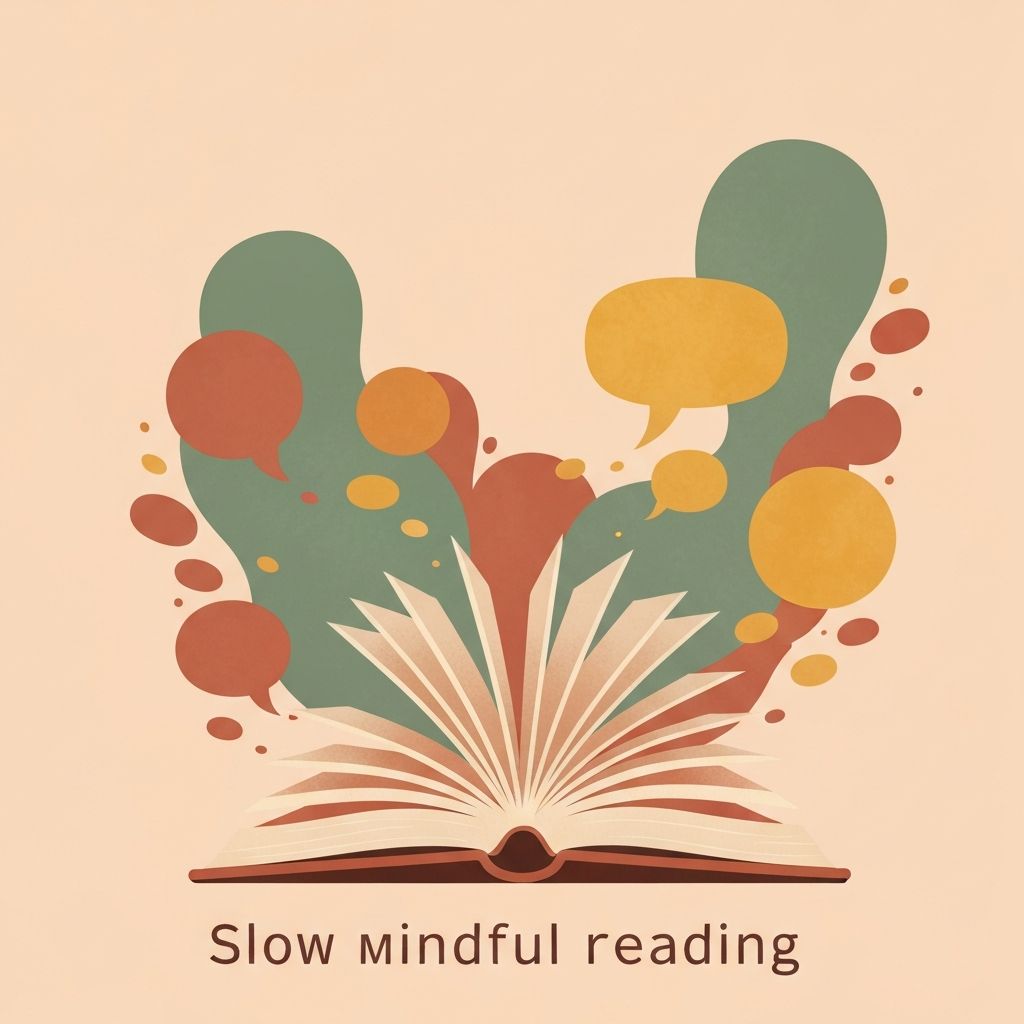
The art of mindful absorption
全神贯注的艺术
The great Argentine writer Jorge Luis Borges once remarked that paradise would be a kind of library. But what good is a library if we merely glance at its offerings, treating wisdom as we would a social media notification? The 's true pleasure lies not in accumulation but in .